A colour-coded kanji card deck
いろいろ漢字
See the parts. Remember the whole.
Every kanji is built from smaller parts, and the same parts come back again and again. IroIro Kanji is a card deck for all 2,136 Jōyō kanji that gives each part one English keyword and one colour, and keeps both the same across the whole deck.
The campaign runs on Kickstarter from 31 October to 30 November 2026.
What it is
Every Jōyō kanji, split into its parts
- 2,136 cards, one for every kanji on the Jōyō list (the official list of kanji for general use in Japan).
- Every kanji split into its parts. Each part has one keyword and one colour, used the same way on every card.
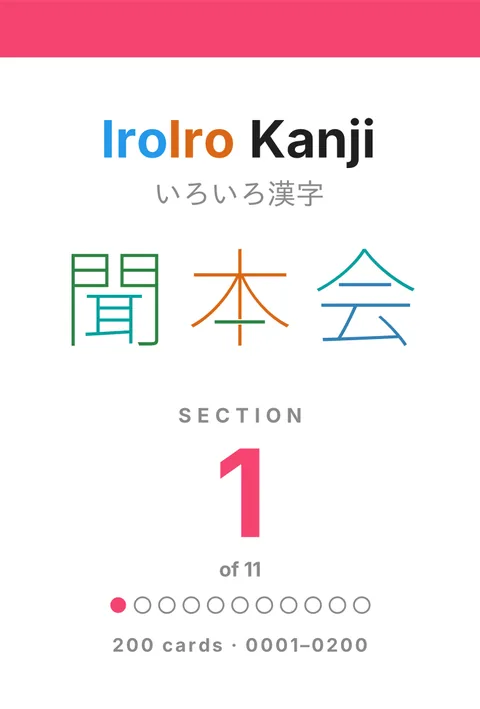
- 11 boxed sections of about 200 cards, ordered by how often the kanji are used, all in one master box.
- Bridge-size cards, 57 × 89 mm, small enough to carry a section in a bag.
- No romaji. Readings are printed in kana: on readings in katakana, kun readings in hiragana.
How a card works
Coloured parts on the front, readings and a story on the back
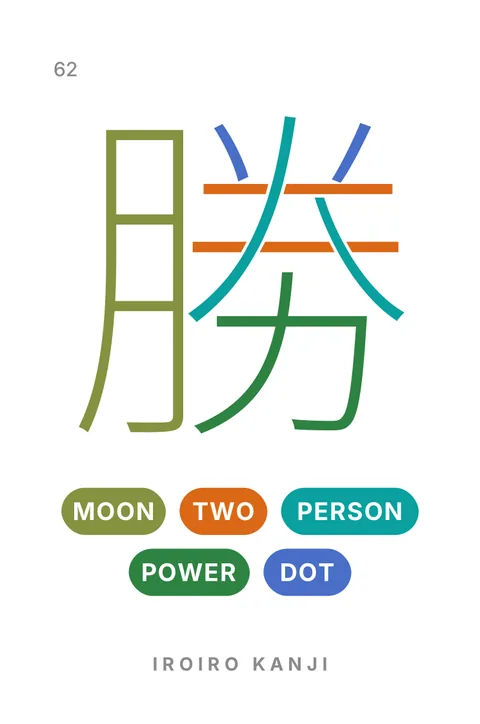
Front. The kanji, drawn with each part in its own colour. Under it, one coloured pill per part with that part’s keyword, in reading order.
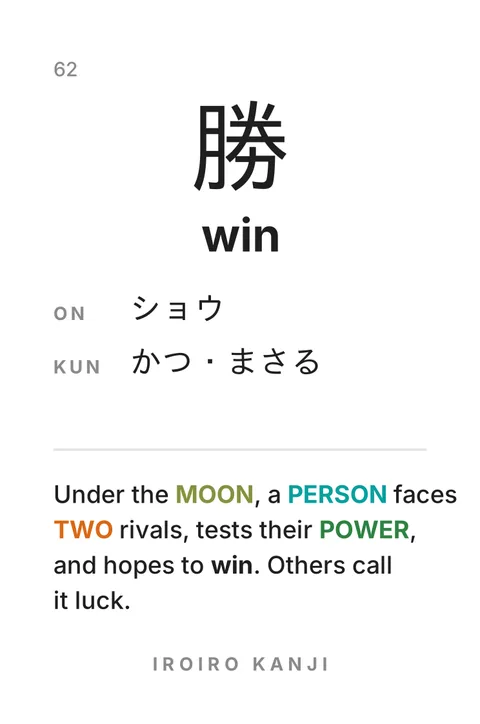
Back. The kanji, its English meaning and its readings. Then a short story that uses the keywords, each printed in its part’s colour.
本 (book) is TREE plus ONE:
A TREE with ONE line under it, made into pages: a book. Most are bought, few are read.
And a hard one stays readable. 鬱 (deep gloom, ON ウツ) has eight pills, and the artwork shrinks a little to make room for them. Every card carries a number on both faces, so you can match the front to the back and find a card in its box.
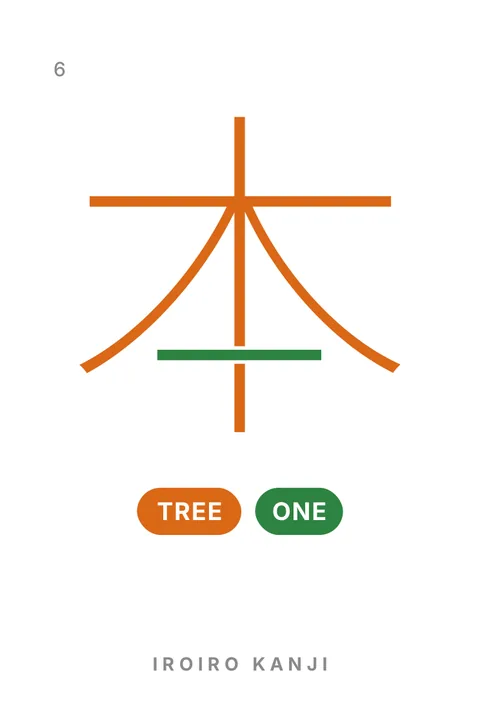
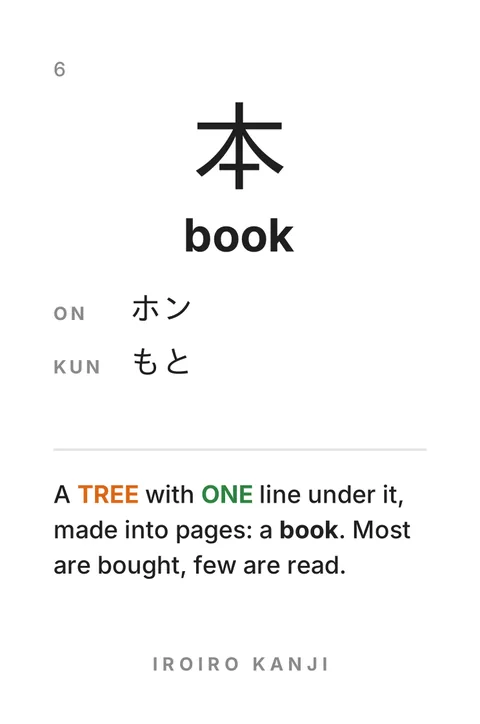
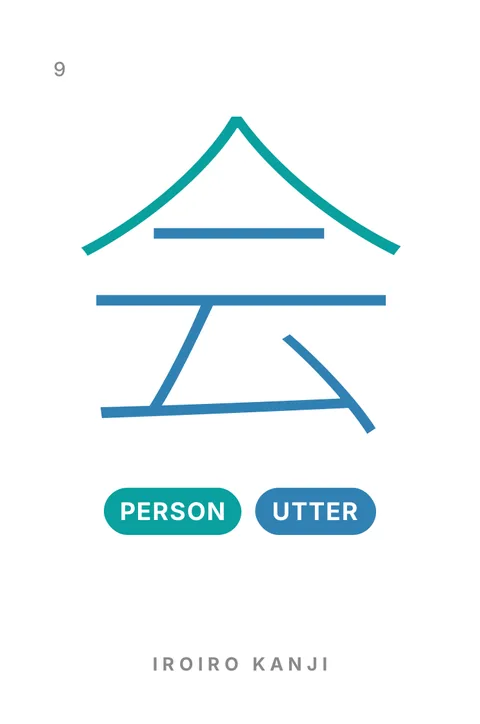
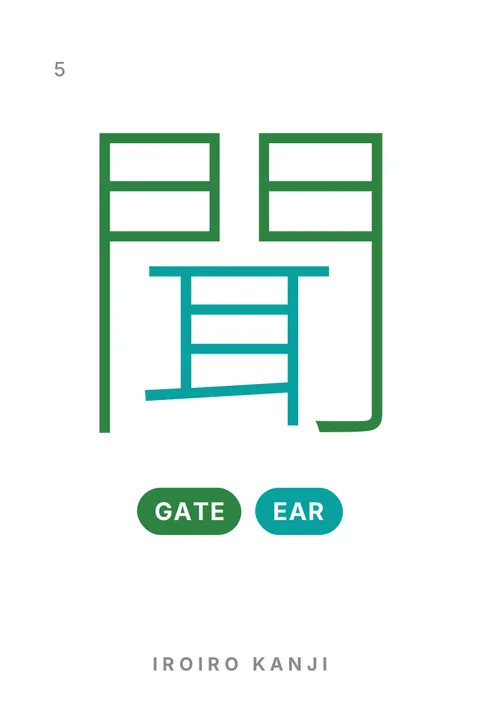
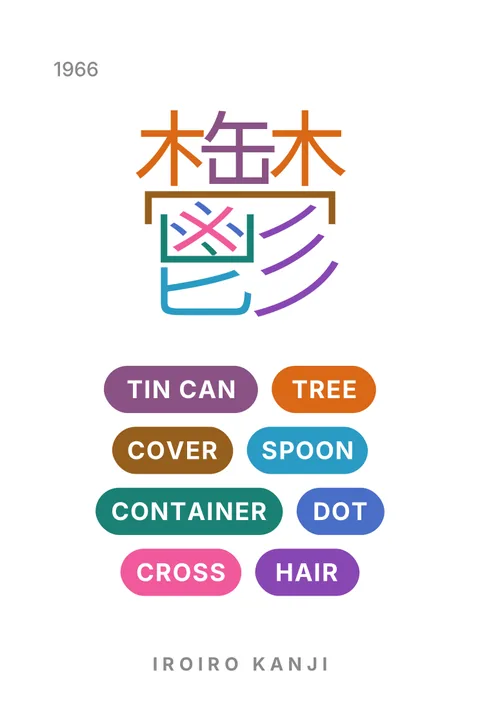
Rendered sample cards. Mnemonics are still drafts.
Why colour
Colour makes the recurring parts visible
Colour does one job here: it makes the recurring parts of kanji visible at a glance. When the same part has the same colour on hundreds of cards, you start to notice patterns, and new kanji look like combinations of parts you already know rather than a new tangle of strokes.
We want to be honest about what colour does and does not do. Research on colour coding for learning characters is mixed, and two lab studies found that colour did not improve short-term recognition. So we do not claim colour will make you memorise faster. We claim it helps you see structure, and the keywords and stories give you something to remember that structure by.
The deck uses 21 colours, chosen to stay distinct from one another on white. Before anything is printed in bulk, we will check every colour on a physical proof on the final card stock.
What’s in the box
11 section boxes in one master box
- 11 section boxes of about 200 cards each, by frequency, from Section 1 (the most common kanji) to Section 11.
- One master box that holds all 11.
- Digital edition for full-set backers: a printable PDF and an Anki deck of all 2,136 cards.
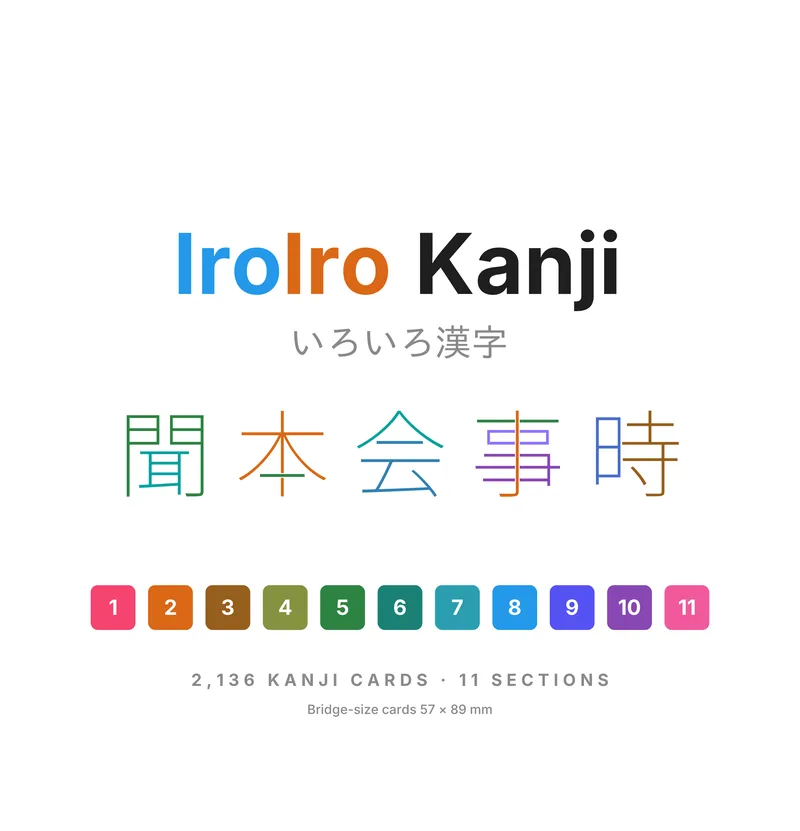
Packaging mockups; final boxes may differ.
Who it is for
From your first kanji to the full list
- Beginners who want to learn the most common kanji first (start with Section 1).
- Intermediate and advanced learners working towards the full Jōyō list.
- Teachers who want a consistent visual system for a class.
Pre-order
Pre-orders open 31 October 2026
The campaign runs on Kickstarter from 31 October to 30 November 2026 (ends 22:00 JST). Follow it now and Kickstarter will email you when it goes live.
Buy direct
Or order directly from us
Prefer not to use Kickstarter? You can order here instead, with checkout handled by Stripe. These buttons go live when direct orders open.
Questions
FAQ
Which kanji are included, and in what order?
All 2,136 kanji on the 2010 Jōyō list, grouped into 11 sections by how frequently they are used, most common first.
Is it aligned with the JLPT?
Not exactly. The sections follow frequency, which overlaps a lot with JLPT levels but is not the same. Section 1 is a good start for a beginner.
What is a “part” and a “keyword”?
A part is a recurring building block of a kanji, such as 木 (TREE). Each part has one English keyword chosen for this deck, and one colour. Both stay the same on every card.
Are there furigana or romaji?
There is no romaji. Readings are on the back in kana: on readings in katakana, kun readings in hiragana.
Does colour really help me learn?
It makes recurring parts and patterns easy to see. Two lab studies found colour coding did not improve short-term recognition, so we do not claim it is proven to speed up memorisation. The keywords and stories do the remembering work; colour helps you see the structure.
Is there a digital or Anki version?
Yes: a printable PDF and an Anki deck of all 2,136 cards. The digital edition is also included with the full-set rewards.
When will my reward arrive?
Our estimate is June 2027, and July is possible.